Whilst reading a post on the Whitchurch Hospital Instagram page I noticed the name Mr Hullin on an extract of the 1946 Annual Report.
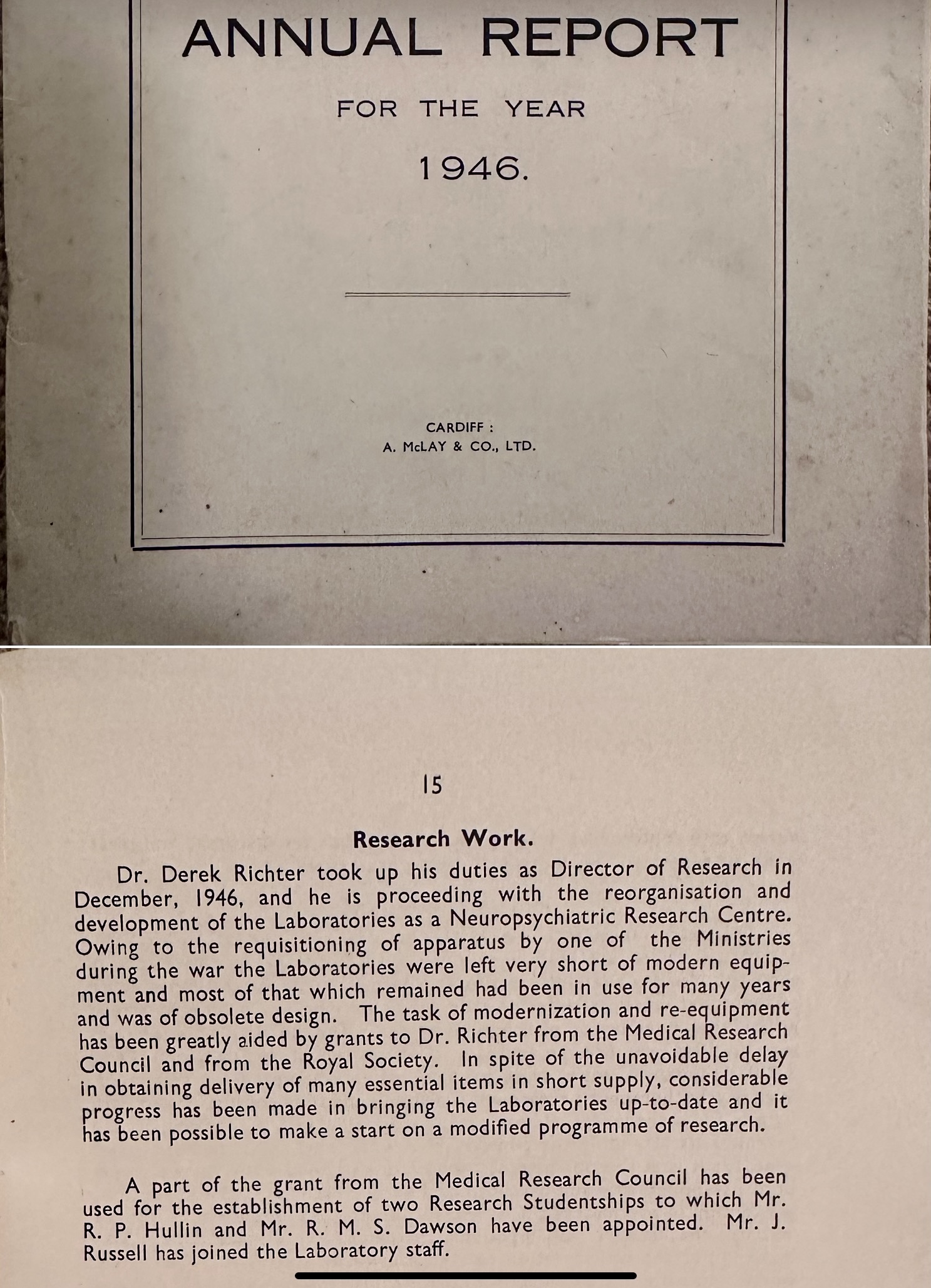
I thought, I know that name. Wondering if it could it be the same Dr Roy Hullin I had read about in other books and articles I commented asking the question – was it him? It wasn’t known so I began investigating!! Gwawr from the Whitchurch Hospital Historical Society found some interesting information regarding his PhD training at the Hospital. I further investigated and discovered a fantastic link to Whitchurch.
Roy Hullin Graduated in Swansea in 1944 gaining a degree in Physics and Chemistry. He began working as a Research Chemist for Boots Drug Company in Nottingham working on anti TB drugs. In 1947 he saw a post advertised at the Cardiff City Mental Hospital, Whitchurch. Having no previous knowledge of mental illness, he started work in the laboratory and was asked by the Director of Research Derek Richter, to study the brains of deceased psychiatric patients. For 2 years he collected the brains of psychiatric patients bringing them back to Whitchurch Hospital. He collected ‘normal’ brains to make comparisons. He processed the brains taking cell nuclei from the cerebral cortex, placing them in a large centrifuge. It was discovered that there was a significant difference in the brains of patients with senile dementia.
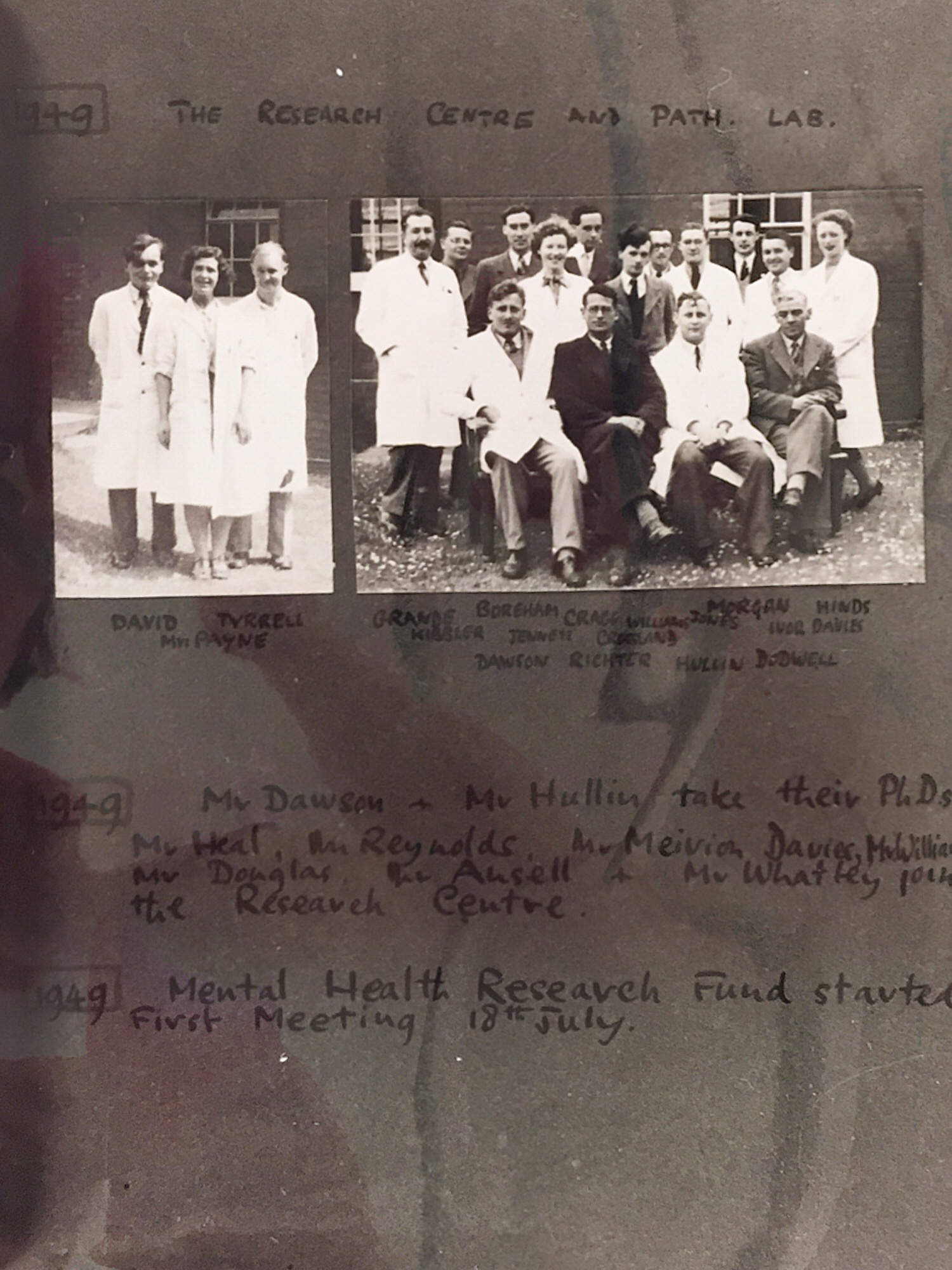
Dr Hullin’s interest in mental illness grew whilst working at Whitchurch hospital and he remained there for 3 years completing his PHD. In 1949 the Universities were given money through the ICI Research Fellowships. Dr Hullin applied and got a Fellowship beginning research on live patients with Professor Happold, the Governor of the Quaker, York Retreat. Dr Hullin spent 3 years researching patients there noticing fluctuating sodium levels in patient with depression. He then became interested in studying patients with ‘manic depression’ we now call this Bipolar disorder. Dr Hullin then took a job at High Royds Hospital, Menston. He wanted to study a greater number of patients and High Royds was a much larger hospital. He was equipped with all the necessary resources and began his research. Dr Hullin’s studies on the use of Lithium changed thousands of patients lives for the better.
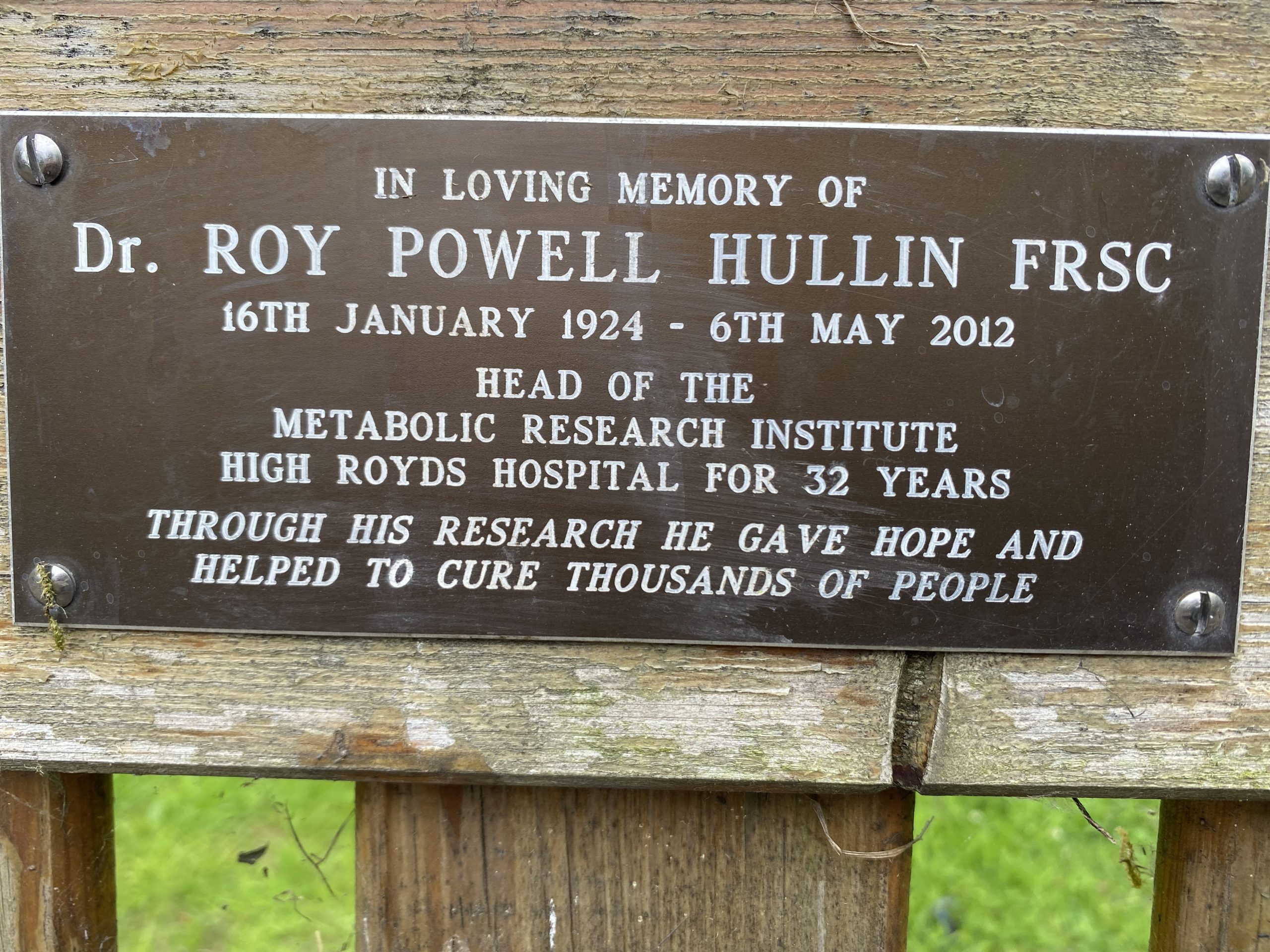
Dr Hullin spent 32 years as head of the High Royd Hospital’s Metabolic Research Institute and was a pioneer in the treatment of ‘manic depression’ (Bipolar disorder)
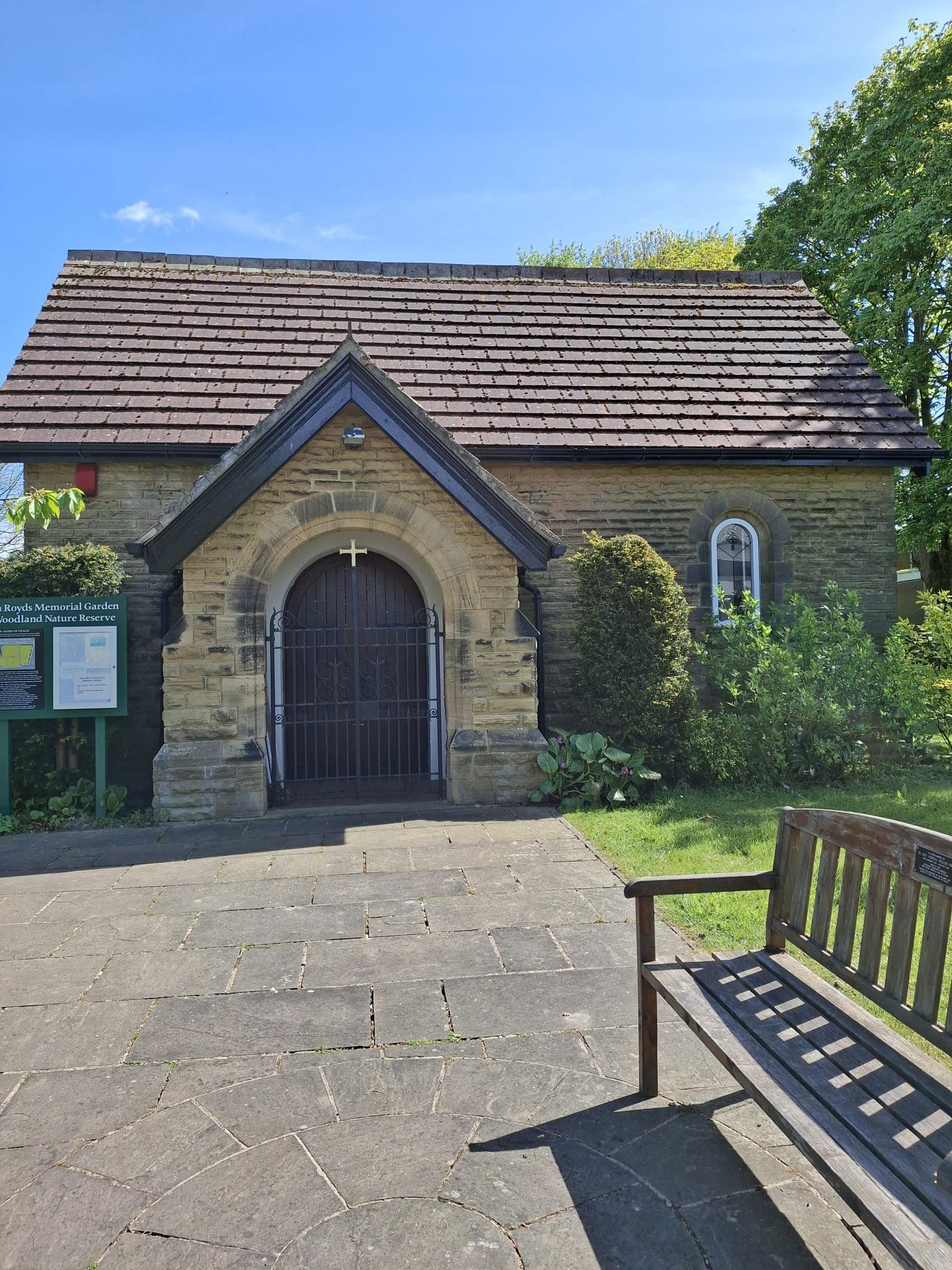
Dr Roy Powell Hullin passed away in May 2012 aged 88 years old. A memorial bench sits in tribute in the High Royds memorial garden.
Thank you to the Friends of High Royds Memorial Garden for sending and giving permission to use their photographs.
I was thrilled to discover Dr Hullin’s career and interest in mental illness began at Whitchurch Hospital and the pioneer he went on to be!
Thank you to Gwawr for asking me to write this piece.
Natalie Warren
Many thanks to the Mental Health Museum, Wakefield, for their assistance with our research and for contacting the Friends of High Royds Memorial Garden.
